
Is the SpaceX IPO the Greatest Investment Opportunity in History — or the Most Dangerous Retail Trap Ever Set?
SpaceX is days from its $75B Nasdaq debut at a $1.8T valuation. Wall Street is split: Starlink is a real cash machine, but Morningstar says the fair value is half the ask, and retail investors are getting an unusually large share allocation. Here's the unresolved debate.

SpaceX is days away from its Nasdaq debut, and the argument on Wall Street has turned vicious.
The company filed its S-1 with the SEC on May 20, 2026, disclosing $18.7 billion in 2025 revenue — up 33% year-over-year — alongside a $4.9 billion net loss. 1 Goldman Sachs is leading the deal. Twenty-three banks are involved. The target raise: $75 billion, which would make it the largest IPO in recorded history — nearly three times the $29 billion Saudi Aramco raised in 2019. 2
The expected valuation sits somewhere between $1.75 trillion and $2 trillion. At the midpoint, SpaceX would rank just behind Nvidia, Alphabet, Apple, Microsoft, and Amazon among the most valuable companies in the world — on its first day of trading. 3
And here is where things get genuinely contentious: roughly one-third of the shares are being reserved for individual retail investors. That allocation is far larger than any typical IPO offers. Whether that's a gift or a setup is the question splitting the investment world right now.
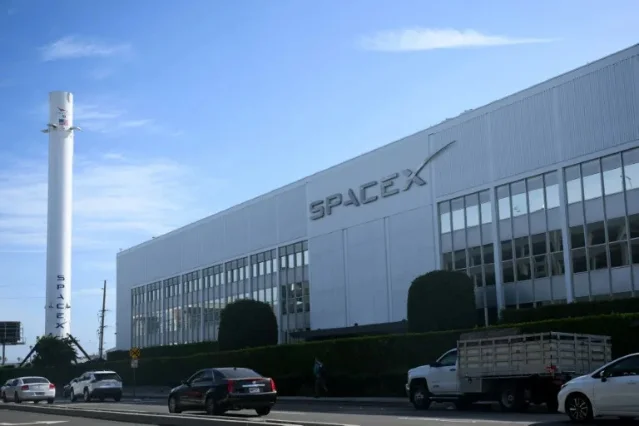
The bull case: Starlink is a cash machine, and Musk is building an empire
Let's start with what the bears concede. Starlink is a real, profitable, scaling business.
SpaceX's satellite internet division generated $11.4 billion in 2025 revenue — 61% of consolidated revenue — and crossed 10 million subscribers in February 2026. 3 Quilty Space projects subscribers growing to 16.8 million by year-end 2026. The launch business, backed by a $5.9 billion Pentagon contract through 2029, contributes another $4.1 billion. Both segments are operationally profitable on a standalone basis.
SpaceX already controls 85% of all orbital launches globally — ahead of China, Russia, and every other nation-state and private competitor combined. 2 The company recently merged with Musk's AI firm xAI and signed Anthropic as an anchor customer paying $1.25 billion per month for compute capacity through 2029.
"If people are willing to pay that price and invest for the future, that's a good sign for the market." — Peter Cardillo, Spartan Capital Securities 1
The bullish case is essentially this: Starlink is the new global internet backbone, Musk is executing faster than any competitor, and a trillion-dollar valuation for a company with dominant infrastructure, government contracts, and AI integration is not crazy if you're thinking in 10-year windows.
The bear case: you're being asked to pay 100x revenue for a company losing billions
Now for the part that actually keeps analysts up at night.
SpaceX's reported IPO valuation implies a multiple of roughly 95–107 times 2025 revenue on a consolidated basis. 3 No comparable aerospace or satellite company trades anywhere near that multiple. In the first quarter of 2026 alone, the company reported a net loss of $4.3 billion on $4.7 billion in revenue.
Morningstar looked at the actual business and concluded SpaceX should be worth around $780 billion — less than half of Musk's $1.8 trillion ask. 1 That gap — $1 trillion in valuation premium — rests entirely on faith in Musk's vision: orbital data centers, moon bases, Mars colonies.
Franco Granda, who covers SpaceX for PitchBook, put it plainly:
"Historically speaking… it's pretty jarring how bad it is." — on post-IPO stock performance for high-profile listings 2
Tim Farrar, president of TMF Associates, went further: "The valuation is completely dependent on the degree to which people believe in Elon Musk. It's not dependent on the current business." 2
That's a significant problem for anyone doing traditional discounted cash flow analysis.
The governance problem nobody wants to talk about
Here is the thing the bulls consistently gloss over: after the IPO, Elon Musk will control more than 82% of voting power in the company. 1
Public shareholders get a piece of the upside — but essentially zero governance rights. Musk can redirect capital toward Mars missions, renegotiate contracts, merge divisions, or make strategic pivots without needing approval. If you buy SPCX, you're not buying a traditional equity stake with board access. You're buying a tracking interest in Musk's personal ambitions.
For some investors, that's fine. Musk has a track record. For others, it's a structural red flag that no prospectus language fully resolves.
The central debate: democratization or a trap for retail investors?
This is the question that has turned financial Twitter, Reddit's r/wallstreetbets, and CNBC's trading floor into something resembling a bar fight.
David Morrison of Trade Nation asked the bluntest version of the question:
"Is this true democratization, the likes of which have never been seen on Wall Street before? Or is it a cynical attempt to unload an extraordinarily expensive and highly speculative venture on a gullible public?" 1
On r/wallstreetbets, users are doing their own math. One widely upvoted post noted that with 555.6 million shares offered out of 13 billion total, and 2025 revenue of $18.7 billion, the IPO implies a 40+ price-to-earnings ratio — before accounting for the fact that the company has no actual earnings. 4
The counterargument, from the retail bull camp: early Amazon investors sat through years of losses. Early Tesla investors sat through near-bankruptcy. The companies that look "obviously overvalued" at IPO are sometimes the ones that later prove the skeptics wrong by orders of magnitude.
Both sides are right about something. That's why the argument doesn't resolve.
What actually has to happen for the valuation to make sense
The SpaceX-at-$1.8-trillion thesis requires several things to go right simultaneously:
- Starlink subscriber growth hits or exceeds Quilty Space's 16.8 million projection for 2026
- The xAI segment — currently losing $2.47 billion per quarter — reaches contribution-margin breakeven within three years
- SpaceX's Colossus 1 orbital data center buildout attracts multi-year anchor tenants beyond Anthropic
- Starship achieves commercial cargo and eventually crew reliability, opening the launch market further
- Elon Musk stays focused on SpaceX rather than Tesla, X (formerly Twitter), or DOGE-era political obligations
Fail two of those five, and the Morningstar $780 billion estimate starts to look generous. Hit all five, and $2 trillion starts to look cheap relative to where this business could be in 2030.
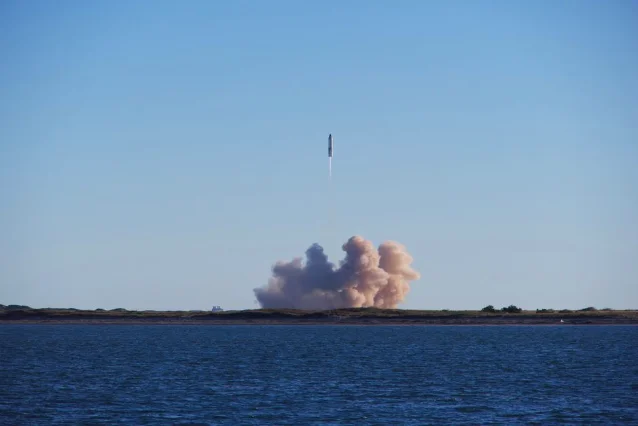
The market stakes beyond SpaceX
The SpaceX IPO doesn't land in isolation. OpenAI is preparing to confidentially file its own S-1 within weeks, targeting a valuation above $1 trillion. Anthropic is reportedly in early discussions with Goldman Sachs, JPMorgan, and Morgan Stanley about its own listing. 3
SpaceX is effectively the proof-of-concept for whether public markets will absorb trillion-dollar AI infrastructure narratives at scale. Renaissance Capital's Matthew Kennedy said it directly: "This has a real possibility of chilling IPO issuance if SpaceX performs poorly, or kicking off a new IPO rebound if it trades well." 1
If SPCX drops 30% on its first week, every AI company eyeing a listing in 2026 will pause. If it holds — or runs — the floodgates open.
So, is it worth buying?
No one at a serious institution is going to tell retail investors whether to buy SpaceX at $135 a share — that's what financial advisors are for. But the honest framing of the question is this:
You are being asked to pay a premium built on future cash flows that do not yet exist, controlled by a CEO who answers to no one, in a macro environment where the Fed's elevated rate policy compresses exactly the kind of long-duration terminal-value bets this offering requires.
The demand is reportedly exceeding expectations. The launch price may move higher. The "cool factor" is real.
None of that is a valuation.
The SpaceX IPO may well be the most consequential market event of 2026. Whether it's consequentially good or consequentially bad for the retail investor buying at the open on June 12 is a different question entirely — and right now, the honest answer is that no one knows.
이 콘텐츠를 둘러싼 관점이나 맥락을 계속 보강해 보세요.